
From Capital Burdento Operational Agility
From Capital Burden to Operational Agility: How transit agencies can transition to a predictable, subscription-based HaaS/SaaS model.
SECTION 01 — THE PROBLEM
Transit Agencies Face a Growing Capital Funding Crisis

Public transit agencies across the United States are operating in an era of unprecedented fiscal uncertainty. Federal and state capital funding streams that were once reliable pillars of fleet modernization, have become increasingly constrained, competitive, and unpredictable. Compounding pressures from inflation, post-pandemic ridership shifts, deferred maintenance backlogs, and tightening discretionary federal budgets have placed agencies in a difficult position: facing higher safety and accountability expectations while having fewer reliable resources to meet them.
The federal transit capital funding environment is showing structural signs of strain. Congressional gridlock has produced repeated continuing resolutions that stall formula funding disbursements. Discretionary grant programs are oversubscribed, with award timelines stretching well beyond original projections. State capital contributions are increasingly subject to competing infrastructure priorities. And at the local level, sales tax and property tax-backed transit funds face growing political resistance. The cumulative effect is a capital pipeline that is slower, smaller, and less certain than at any point in recent memory.
Capital budgets are shrinking at the exact moment when fleet safety technology demands are growing fastest.
Transit agencies have traditionally procured dash cameras, telematics hardware, and fleet intelligence platforms as capital expenditures (CAPEX) or large, one-time purchases funded through grants such as FTA Section 5307, 5310, or 5339. This procurement model, while familiar, is increasingly misaligned with the pace of technology change and the realities of today's funding environment. The structural vulnerabilities it creates are becoming impossible to ignore:
- • Federal grant cycles are multi-year, slow, and highly competitive and agencies may wait 18–36 months from application to deployment authorization, while safety gaps persist in the field.
- • Continuing resolutions and federal budget uncertainty can freeze, or claw back committed capital funding mid-cycle, stranding partially deployed programs without a clear path to completion.
- • Technology purchased today on a 7–10 year depreciation schedule is often functionally obsolete within 3–4 years, as AI, sensor, and connectivity capabilities advance rapidly.
- • Smaller and mid-size transit agencies frequently lack the procurement and IT infrastructure required to manage large hardware acquisitions, driving up administrative costs and timelines.
- • Ongoing software licensing, cellular data, maintenance, and hardware refresh costs are routinely excluded from original capital grants, creating unfunded lifecycle obligations that consume operating budgets unplanned.
- • Climate-related service disruptions, operator shortages, and ADA compliance demands are drawing down operating reserves — leaving even less flexibility for technology initiatives that fall outside grant scope.
SECTION 02 — THE IMPACT
What Funding Uncertainty Costs Transit Agencies

The downstream consequences of CAPEX dependency extend far beyond delayed procurement. When agencies cannot reliably fund and deploy fleet safety technology, the operational, safety, financial, and reputational risks compound year-over-year, often in ways that far exceed the cost of the technology investment itself.
Unrecorded incidents create immediate liability exposure. Without onboard video, agencies have no objective record of what occurred in a collision or passenger dispute. Defense costs rise, settlements trend larger, and insurers take note. Across the industry, agencies with verified video telematics programs report measurably lower claim frequency and severity. This is a direct financial benefit that CAPEX-constrained agencies systematically forfeit.
Driver behavior risk goes unmanaged. Without AI-powered event detection, speeding, harsh braking, distracted driving, and fatigue indicators go unidentified until they result in an incident. Agencies operating without intelligent scoring and coaching workflows are effectively managing safety reactively rather than proactively, accepting preventable risk as a budget-driven norm.
Real-World Consequences of Delayed Fleet Technology Deployment
|
The insurance market is beginning to price these gaps explicitly. Carriers offering fleet-specific commercial transit coverage are increasingly tiering premiums based on the presence, or absence, of AI event detection, driver identification, and video retrieval capability. Agencies without these systems are not simply missing a feature; they are being assessed as a higher-risk class, with premium consequences that can dwarf the subscription cost of a modern telematics solution.
At the regulatory level, the direction of travel is unambiguous. Federal motor carrier safety standards, state transit authority requirements, and FTA safety oversight frameworks are all trending toward mandatory onboard recording and incident documentation. Agencies that defer modernization today will face a harder, more expensive mandate-driven deployment tomorrow without the flexibility to structure it as a favorable operating subscription.
The core issue is structural: transit agencies need operating-budget solutions, not capital-budget solutions. The technology must be affordable, predictable, and deployable now without waiting for a grant cycle that may not materialize on schedule, if at all.
SECTION 03 — THE SOLUTION
The shift to fleet safety as a service: why transportation agencies are rethinking how they fund intelligence
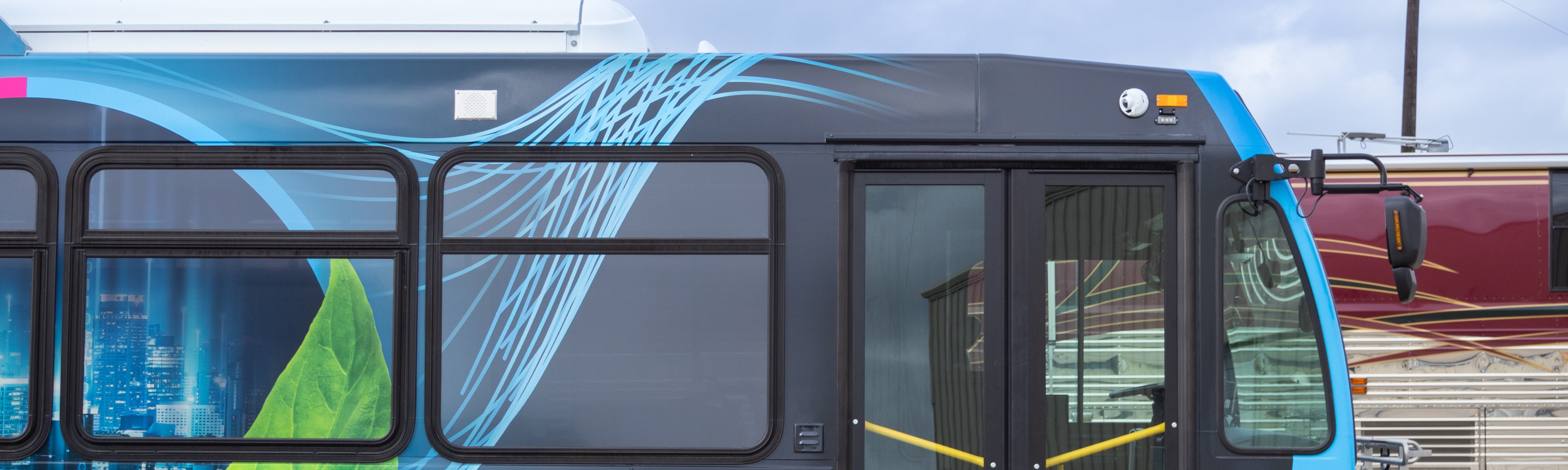
For decades, mobile video surveillance has been treated as a capital investment — hardware purchased in cycles, depreciated over five to seven years, and funded through grant programs that reward large upfront commitments. That model made sense when cameras were passive recorders. It increasingly doesn't when fleet safety systems are becoming live, AI-powered platforms that require continuous software updates, real-time connectivity, and ongoing data management to deliver their value.
A growing number of transit agencies and fleet operators are moving toward a hardware-as-a-service (HaaS) or subscription-based model that bundles the camera hardware, software platform, and managed updates into a single predictable monthly cost per vehicle. The shift has meaningful implications for how agencies budget, procure, and deploy fleet safety technology.
Moving from CAPEX to OPEX: The Model Comparison
The practical differences between a traditional capital purchase and a subscription model touch every stage of the technology lifecycle:
Traditional CAPEX Model | Subscription/HaaS Model |
| Large upfront hardware purchase | Predictable monthly subscription |
| Multi-year depreciation cycles | Always on current technology |
| IT burden for maintenance & upgrades | Managed updates via VisionCloud |
| Budget uncertainty year-to-year | Scalable fleet-wide pricing |
| Grant-dependent capital approval | Fits within operating budget authority |
| Delayed deployment due to procurement | Rapid install, same-day activation |
The funding case for operating expense classification
Operating Budget Eligible: Subscription costs are classified as operating expenses — fundable through FTA Section 5307, state subsidies, or farebox recovery, meaning a monthly per-vehicle subscription may be deployable without a capital grant application, procurement committee approval, or multi-year depreciation schedule.
For agencies with constrained capital budgets but stable operating revenue, this is a meaningful procurement path that CapEx-based purchases simply don't offer.
The model also eliminates technology obsolescence risk. When hardware and software updates are managed within a subscription, agencies are no longer carrying aging equipment through the final years of a depreciation cycle while competitors operate on a newer generation of sensors, AI models, and connectivity standards.
SECTION 04 — THE PATH FORWARD
The Safety Vision Answer

Safety Vision has spent more than three decades building mobile video surveillance for the most demanding fleet environments in North America — school buses, mass transit, first responders and commercial fleets. That depth is now embedded in a modern subscription platform delivering real-time fleet visibility, AI-powered event detection, driver coaching, and operational analytics through a single managed monthly cost per vehicle.
Hardware installs quickly. The platform activates the same day. Subscription costs are operating-expense eligible, removing the capital grant dependency that stalls most modernization efforts.
Enterprise-grade technology. A funding model that fits how agencies actually operate. One platform that scales from a single fleet type to every vehicle an organization runs buses, vans, and rail vehicles on one contract, one dashboard, one vendor relationship.
Fleet safety intelligence no longer requires a capital campaign to get started. Safety Vision makes it a line item.

Discover More

COPYRIGHT © 2026 SAFETY VISION,LLC. ALL RIGHTS RESERVED.
PRIVACY POLICY | TERMS OF USE | ACCESSIBILITY | COOKIE PREFERENCES